
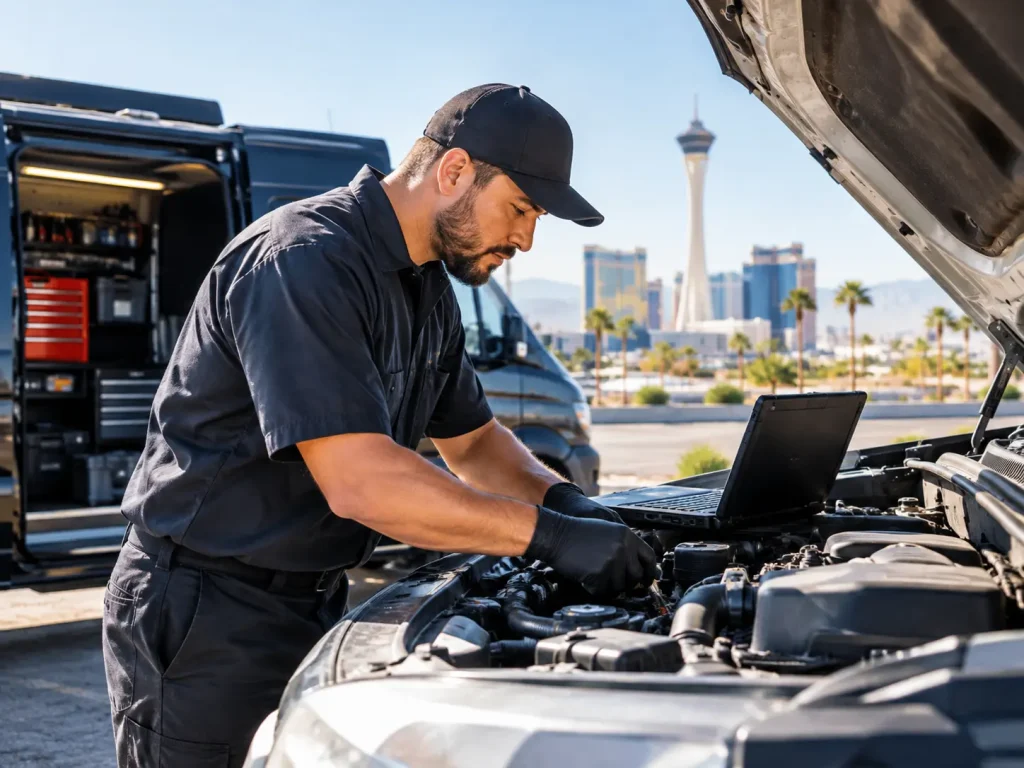
Summer in Mesa is not like summer in most places. Triple digit temperatures arrive early, stay late, and turn a parked car into an oven. Every part of your vehicle works harder when the thermometer climbs, and parts that were barely getting by in spring can fail outright in July. The good news is that most heat related breakdowns can be avoided with a little preparation. This guide shares the must do summer car maintenance tips for Mesa drivers, explains how extreme heat affects your car, and covers the common problems, including heat damaged batteries, and how a mobile mechanic can take care of them at your home or workplace before the hottest weeks arrive.
Why Arizona Heat Is So Hard on a Car
Heat speeds up almost every kind of wear. It thins fluids, dries out rubber, bakes plastic, strains cooling systems, and accelerates chemical reactions inside the battery. A car that sits in a sun baked parking lot can reach very high temperatures inside and under the hood, and then you ask it to run the air conditioning at full blast through stop and go traffic. That combination is a real test. Preparing early means finding weak parts on your schedule instead of on the shoulder of a freeway at midday.
Start With the Battery
Many drivers think of cold weather as the enemy of batteries, but heat does the quiet damage. High temperatures speed up the chemical reaction inside the battery, which causes internal parts to wear and fluid to evaporate faster. A battery that suffers through a hot summer may seem fine for a while, then fail without much warning, often when the weather cools a little or when the car sits for a few days. Watch for these signs of a heat damaged battery:
- Slow or labored cranking when you start the engine
- Dim headlights or interior lights, especially at idle
- A battery or charging warning light on the dashboard
- Corrosion, a white or blue crust, on the terminals
- A swollen or bulging battery case
- A battery that is several years old
A technician can test the battery and the charging system to see how much life is left, which is far better than guessing. If your car has ever been slow to start, our guide to the top 10 reasons your car won’t start and how to get back on the road walks through the common causes and what to try first.
Check the Cooling System
Your engine makes a lot of heat, and the cooling system has to carry it away in a very hot environment. Before summer peaks, make sure the system is ready:
- Check the coolant level in the reservoir when the engine is cold, and never open the cap on a hot engine
- Look at the coolant color and condition, and follow the replacement interval in your owner’s manual
- Inspect the hoses for cracks, bulges, or soft spots
- Look for leaks, stains, or a sweet smell around the engine
- Make sure the radiator fans come on when they should
- Watch the temperature gauge, especially in traffic and on hot afternoons
Overheating is one of the most common summer breakdowns, and it can cause serious engine damage if you keep driving. If the gauge climbs or you see steam, pull over safely and turn off the engine, and let it cool before you check anything.
Get the Air Conditioning Ready
In Mesa, air conditioning is a necessity, and AC trouble tends to show up on the first truly hot day. If your air is weaker, warmer, or noisier than it used to be, do not wait for the heat to get worse. A system low on refrigerant usually has a leak, and simply topping it off does not fix the cause. Other common issues include a failing compressor, a clogged cabin air filter, and cooling fan problems. Our article on why Mesa drivers should check their AC before summer hits explains what to look for and why early attention pays off.
Look Closely at the Tires
Hot pavement can be brutal on tires. Heat raises the pressure inside the tire and softens the rubber, and an underinflated or worn tire can fail quickly under those conditions. Before summer:
- Check the pressure on all four tires, and the spare, when the tires are cold
- Use the pressure listed on the label inside the driver’s door jamb or in the owner’s manual
- Look at the tread depth and the sidewalls for cracks, bulges, or cuts
- Look for uneven wear, which can point to alignment or suspension trouble
- Check the age of the tires, since rubber hardens and cracks over time even if the tread looks fine
Tire pressure can change with the temperature through the day, so check it in the morning before you drive.
Do Not Overlook the Brakes
Heat and heavy traffic add stress to brakes. Pay attention to squealing, grinding, a soft pedal, pulling to one side, or a burning smell, and have them inspected promptly if you notice any of those. Brake fluid also absorbs moisture over time, and hot conditions can make older fluid less effective, so your owner’s manual may list a service interval worth following. Brakes are a safety system, so when you are unsure, have them looked at.
Check the Fluids
Heat is hard on oil and other fluids. Check these with the engine off and cool, following your owner’s manual for the correct method:
- Engine oil level and condition
- Brake fluid level
- Power steering fluid, if your car uses it
- Transmission fluid, on vehicles that have a dipstick
- Windshield washer fluid, since dust and bugs build up quickly
If a level is low, it usually means a leak or heavy consumption, and that is worth having checked. Use only the fluids your owner’s manual calls for, and follow the recommended service intervals, which are often shorter for severe driving conditions such as extreme heat and heavy traffic.
Inspect the Belts and Hoses
Rubber parts dry out and crack in the heat. The serpentine belt drives the alternator, water pump, power steering, and air conditioning, and a belt that fails can leave you stranded quickly. Look for cracks, fraying, glazing, or a squeal when you start the car. Hoses should feel firm, not mushy or brittle. A technician can check tension and condition and replace parts that are near the end of their life.
Protect the Wipers, Lights, and Glass
Sun and heat destroy wiper blades, so they often fail just as the monsoon season arrives and you need them most. Check them for cracking, streaking, or stiffness. Make sure your headlights, brake lights, and turn signals all work, and clean the windshield inside and out to cut glare. A small chip in the glass can spread quickly in extreme temperature swings, so have it looked at early.
Protect the Interior and Paint
The sun is hard on more than the mechanical parts. Use a sunshade, park in the shade or in a garage when you can, and consider window tinting where it is legal. Keep leather and plastic surfaces clean and protected with products made for the purpose. Wax or sealant helps protect the paint from ultraviolet damage. Be careful about what you leave in the car, since heat can damage electronics, melt items, and, in the case of aerosol cans and lighters, create a safety hazard. Never leave children or pets in a parked car, even for a few minutes.
Build a Summer Emergency Kit
- Plenty of drinking water for everyone in the car
- A phone charger and a charged phone
- Jumper cables or a portable jump starter
- A flashlight, a basic first aid kit, and sun protection
- A tire pressure gauge and the owner’s manual
- Extra coolant that matches your vehicle’s requirement
- A light blanket or towel and some snacks
If you do break down in the heat, stay with your vehicle when it is safe, call for help, and avoid long walks in the sun.
A Simple Summer Checklist
- Battery tested and terminals clean
- Coolant at the right level and condition, with hoses in good shape
- Air conditioning blowing cold and the cabin filter clean
- Tires at the correct pressure, with good tread and no cracks
- Brakes quiet and responsive
- Oil and other fluids at proper levels
- Belts free of cracks, and wipers in good condition
- Emergency kit stocked and sunshade ready
Can a Mobile Mechanic Handle Summer Prep?
In many cases, yes. A mobile mechanic can come to your home or workplace in the Mesa area, test the battery and charging system, inspect the cooling system, belts, hoses, tires, and brakes, check fluids, and handle many common repairs on site, such as battery replacement, belt replacement, and fluid service. That means you can get ready for summer without sitting in a hot waiting room. Some jobs, such as major air conditioning work or repairs that need a lift or specialized equipment, may need a full shop, and a trustworthy technician will tell you honestly when that is the case. When you book, share your vehicle’s year, make, model, and mileage, and mention anything you have noticed, such as slow starts, weak air conditioning, or warning lights.
Get Ahead of the Heat
The best time to prepare for summer is before it arrives. A battery test, a cooling system check, and a look at the air conditioning can prevent the kind of breakdown that no one wants in Arizona heat. If you have not had your car looked at recently, schedule a check now.
To learn more about our services, visit our homepage. If you would like your car checked before the heat peaks, reach out through our contact us page and we will come to you anywhere in the Mesa area.